
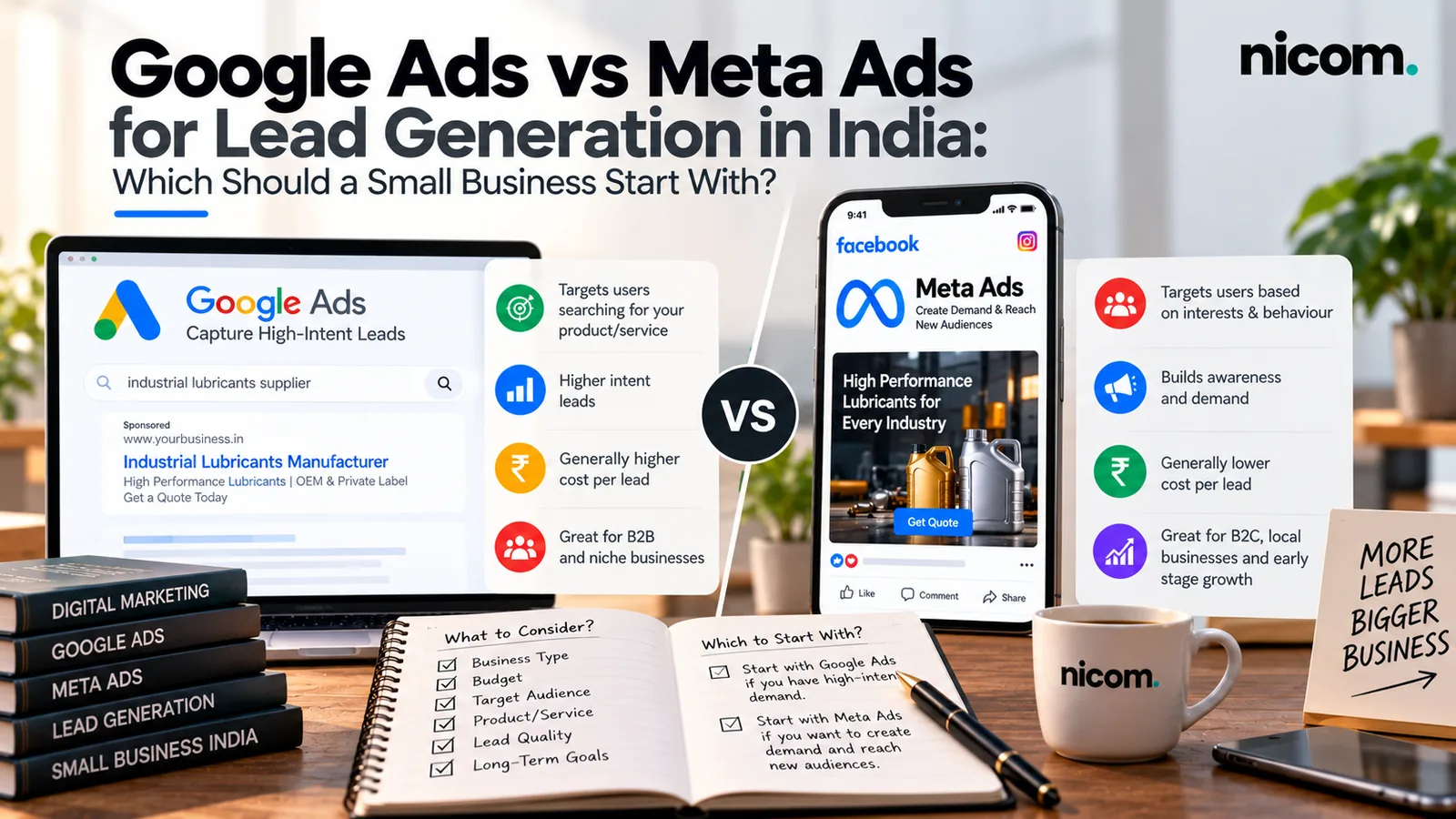
Short answer: start with Google Ads if people already search for what you sell, for example “CNC machine supplier in Delhi”, “CA for GST registration” or “AC repair Rohini”. Start with Meta Ads (Facebook and Instagram) if you need to create demand for something people don’t actively search for, or if your offer sells on visuals, emotion or impulse. In our experience Meta often produces cheaper raw leads, while Google search leads tend to be more ready to buy. So judge both by the cost of a qualified lead or a sale, not the cost of a form fill.
The Google Ads vs Meta Ads question comes up in almost every first meeting we have with a business owner. This guide helps Indian small and mid-size businesses decide where to put their first advertising budget, and when to use both.
The core difference: intent vs attention
| Google Ads (Search) | Meta Ads (Facebook and Instagram) | |
|---|---|---|
| How people find you | They type a need into Google | They scroll and your ad interrupts them |
| Buyer mindset | Actively looking, often comparing options | Not looking yet. Needs to be persuaded |
| Targeting | Keywords, location, schedule, audiences | Interests, demographics, behaviour, lookalikes, location |
| Typical lead quality | Higher intent, fewer leads | More leads, wider spread of quality |
| Creative needed | Clear text ads and a strong landing page | Scroll-stopping images, videos and reels |
| Best for | Services and products with existing search demand | Discovery, visual products, offers, events, brand building |
When Google Ads is usually the better first choice
- Urgent or need-based services: repairs, legal, medical, CA and tax services, pest control, movers.
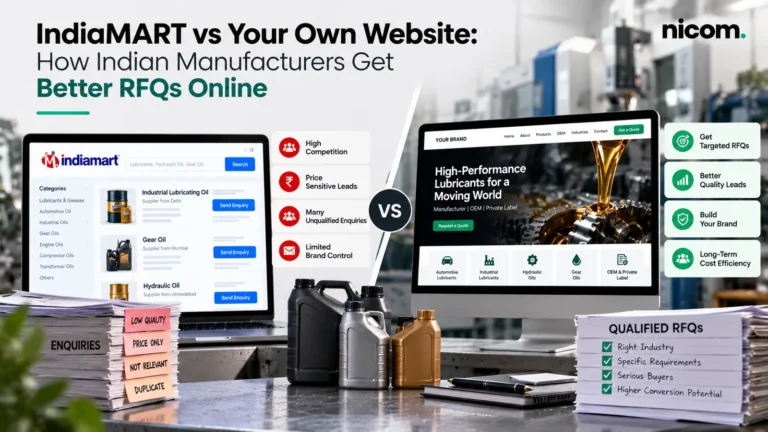
- B2B and industrial products: buyers search with specific terms such as product names, specifications, “manufacturer” or “supplier”. A few relevant clicks can be worth a lot. See our guide on lead generation for manufacturers in India.
- Local “near me” searches where location matters.
- Businesses with a good landing page that clearly explains the offer and makes it easy to call, WhatsApp or fill a form.
The trade-off: popular keywords can be expensive per click in competitive Delhi categories, and search volume is limited. You can’t create more people searching just by spending more.
When Meta Ads is usually the better first choice
- Visual or lifestyle products: fashion, home décor, food, beauty, D2C brands.
- New or unfamiliar offers that people don’t know to search for yet.
- Events, admissions, launches and limited-time offers.
- Personal brands and consultants who build trust through video and content. Our video and reels team works on exactly this kind of creative.
- Retargeting people who visited your website but didn’t enquire. We cover this in our guide to retargeting for small businesses in India.
The trade-off: lead forms inside Facebook and Instagram are very easy to submit, so a share of leads will be casual, accidental or poorly matched. You need qualifying questions and fast follow-up. Our article on why Facebook lead ads bring fake or junk leads explains how to fix that.
A simple decision framework
- Search for your own service on Google, in the way a customer would. If competitors are running ads and there are clear commercial results, there is search demand. Google is a strong candidate.
- Ask how customers usually discover you. If it’s “they saw us somewhere and got interested”, Meta fits. If it’s “they needed this and searched”, Google fits.
- Look at your average order or deal value. High-value B2B deals can justify higher cost per lead from search. Low-ticket consumer products often need Meta’s scale.
- Be honest about your follow-up capacity. If nobody can call leads within an hour, Meta lead forms will disappoint you. Search leads tolerate slower follow-up slightly better, but not much.
- Check your creative. Without decent images or short videos, Meta campaigns struggle. Without a decent landing page, Google campaigns struggle.
How to measure which platform is really working
Cost per lead (CPL) on its own is misleading. A ₹200 lead that never answers the phone is more expensive than a ₹1,500 lead that becomes a customer. Track this funnel for each platform:
| Stage | What to measure |
|---|---|
| Leads | Form fills, calls, WhatsApp chats |
| Contacted | Leads your team actually reached |
| Qualified | Right need, right location, right budget |
| Opportunity | Quote sent, meeting or site visit booked |
| Customer | Order received or deal closed |
The metric that matters is cost per qualified lead and, eventually, cost per customer. To get there you need conversion tracking on your website and a basic CRM or even a shared sheet where your team updates each lead’s status.
Budget: how much should you start with?
There is no universal number. It depends on your city, category and competition. As general guidance:
- Pick one platform and one offer to start, rather than splitting a small budget across everything.
- Commit to a test period of at least four to six weeks so the platforms have enough data to optimise.
- Set a budget you can sustain for that period, and decide in advance what result would make it worth continuing.
- Remember that the agency management fee is separate from your ad spend, and both usually carry GST.
Using both together
Once one channel is working, the two platforms complement each other well:
- Google Search captures people who are ready to buy.
- Meta builds awareness among the right audience and retargets website visitors with testimonials, case studies and offers.
- Google Display and YouTube can also retarget, and show video to people who have already engaged.
Many of our clients start on Google Ads for immediate high-intent enquiries, then add Meta Ads for retargeting and awareness once tracking is in place.
Three example scenarios
An industrial equipment supplier in North Delhi
Buyers search for specific machine types and spare parts. Google Search campaigns on product and specification keywords, sent to detailed product pages with an RFQ form, are usually the right start. Meta comes later, mainly for retargeting and showcasing factory or installation videos.
A home décor brand selling across India
People rarely search for a specific new brand. They discover products while scrolling. Meta, with strong product photos and reels, is the natural starting point. Google Shopping and branded search can then capture people who come back looking for the brand.
A consultant or coaching practice
Some clients search for the service (“GST consultant in Pitampura”), and many others need to trust the person first. A mix often works: Google Search for active demand, and Meta video ads that explain the expertise, followed by retargeting.
Common mistakes we see
- Sending all ad traffic to the homepage instead of a focused landing page.
- Using broad keywords on Google without negative keywords, and paying for irrelevant searches.
- Running Meta lead forms with only name and phone, then complaining about lead quality.
- Judging campaigns after one week.
- No conversion tracking, so no one knows which ads produce customers.
- Boosting posts and calling it advertising.
Frequently asked questions
Which is cheaper, Google Ads or Facebook Ads, in India?
Meta often gives a lower cost per raw lead, while Google search clicks can cost more but bring higher intent. The cheaper platform is the one that delivers the lowest cost per customer for your business, which you only learn by tracking.
Are Google Ads good for B2B companies?
Yes, especially when buyers search for specific products, specifications or services. B2B search volumes are smaller, but each lead can be valuable.
Can I run ads without a website?
Meta lead forms and click-to-WhatsApp ads can work without a website. Google Ads works best with a good landing page. A website also builds trust before people contact you.
How soon will I get leads from ads?
Ads can start delivering enquiries within days of going live. Optimising for consistent, good-quality leads usually takes a few weeks of data and adjustments.
Should I hire an agency or run ads myself?
If you have time to learn and monitor campaigns, you can start yourself with a small budget. An experienced agency helps avoid expensive set-up mistakes and connects ads with tracking, landing pages and follow-up.
Not sure where to spend your first ad budget?
Tell us what you sell, where your customers are and how you follow up leads. We’ll recommend a starting channel and a realistic test plan. Explore our performance marketing services, or get in touch for a free ad-channel plan. You can find more practical guides on our Insights page.
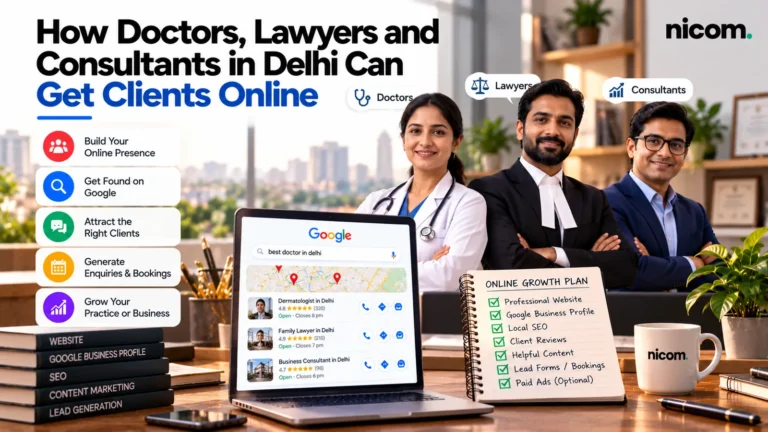
Pingback: How to Get Clients Online: Doctors, Lawyers, Consultants